
Crochet Battenberg Bag Free Pattern: Retro Square Market Tote
Heirloom pastel checkerboard granny square market bag tutorial with scalloped edging and reinforced handles.
Yarn Selection: 100% Mercerized Cotton vs Linen for Zero Bag Sag
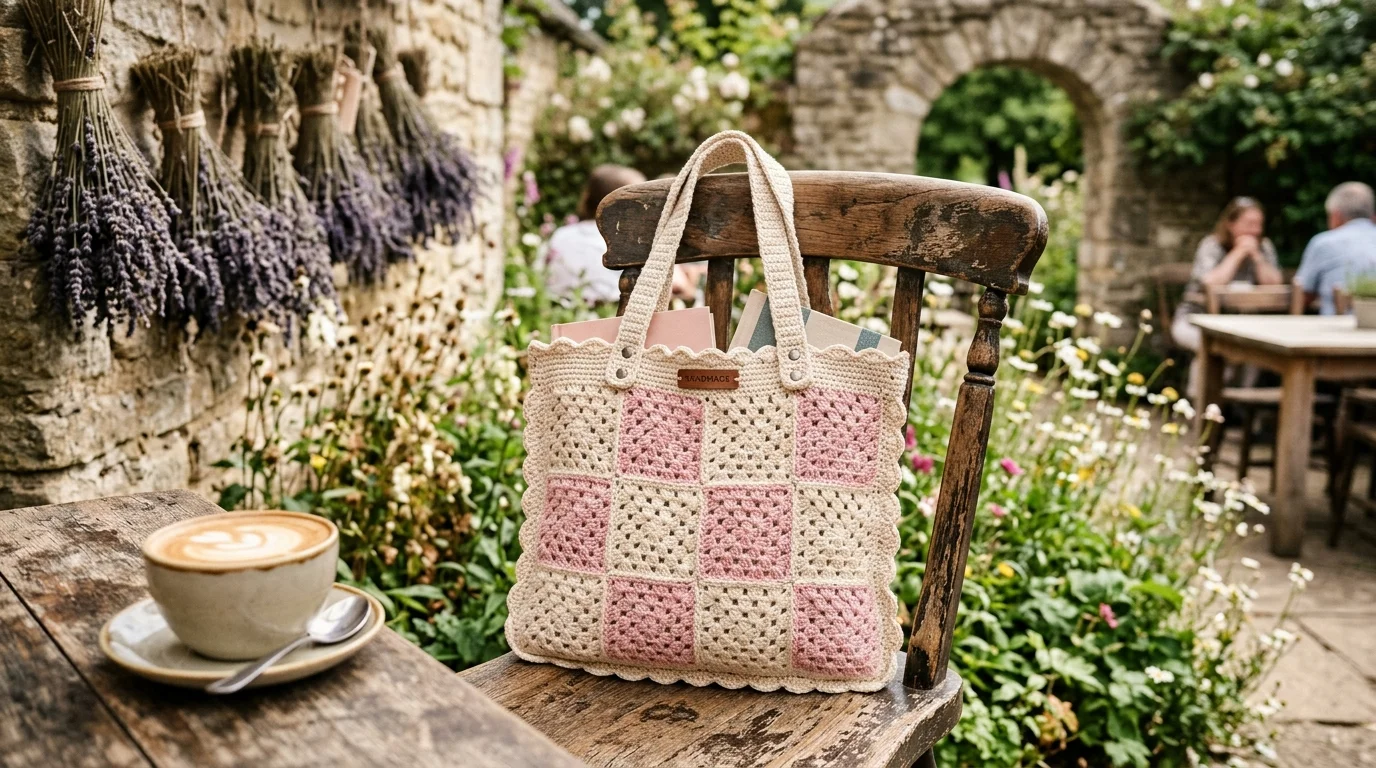
The crochet Battenberg bag is a vintage-inspired tote constructed from modular two-tone geometric granny squares resembling traditional English Battenberg cake slices. Worked in durable 100% mercerized cotton on a 4.0mm (US G-6) hook, this stylish everyday market tote offers reinforced straps and generous interior volume with zero sag.
Inspired by the classic British confectionary, this Granny Square Tote combines pastel pink and cream squares in an eye-catching Two-Tone Geometric Motif. Check our free crochet patterns catalog to estimate exact skein quantities if substituting organic linen, raffia, or sturdy unmercerized dishcloth cotton.
100% Mercerized Cotton is the ultimate fiber choice for handmade bags. Through the chemical process of mercerization under tension, cotton strands are straightened and polished, stripping away fuzzy micro-halos and significantly increasing the yarn's tensile yield strength. When filled with heavy farmers market produce, water bottles, or books, Zero-Sag Bag Construction resists drooping and holds its clean rectangular drape without sagging to your knees.
The classic Battenberg Bag is assembled from 13 four-round granny squares. By arranging the squares in an angled diamond layout and folding the outer corners inward, you create an organic self-gusseted base that sits flat on countertops. If you desire a roomier weekend shopper, simply expand the design to 18 squares or add a 5th round of double crochet stitches to each individual block.
Crocheting Two-Tone Battenberg Granny Squares & Seamless Joining
Executing crisp color transitions between Round 2 (pastel pink) and Round 3 (warm cream) is crucial for the distinct Battenberg checkerboard look. When completing the final double crochet of Round 2, execute the last yarn over with the new cream yarn strand, pulling it through the remaining two pink loops on your 4.0mm Crochet Hook (US G-6). This locks the color change precisely at the stitch base rather than leaving a muddy hybrid loop visible on the front face.
Rather than tying harsh knots that could come undone or cause uncomfortable bumps against your shoulder, crochet over both yarn tails for 6 to 8 stitches along Round 3. Thread the remaining 3 inches of tail onto a bent-tip tapestry needle and weave in three alternating directions through the center posts of the double crochet cluster to permanently anchor the fiber against unraveling during laundry.
Sturdy Bag Straps: Thermal Stitch Handles & Fabric Lining Tutorial
Before seaming your tote, wet block all 13 granny squares using foam blocking grids and stainless steel T-pins. Pin each motif to precisely 4.5″ × 4.5″ (11.5 cm) and steam gently with a clothes steamer or damp pressing cloth. Steam blocking relaxes the cotton twist, sets sharp 90-degree corners, and guarantees that every pair of joining edges matches stitch-for-stitch during mattress seaming.
To join the motifs into the bag body: arrange the 13 squares into a cross-shaped layout (3 center squares for the front panel, 3 for the back panel, 2 for side gussets, 1 for the base, and 4 folded over the top rim). Seam right sides together using a whipstitch through the back loops only (BLO) or a flat slip stitch join. The BLO technique creates an invisible, clean join on the exterior while providing an internal stabilizing ridge that adds structural rigidity to the tote walls.
Shoulder strap stretching is the primary complaint among crochet tote makers. To eliminate strap creep, craft each Thermal Stitch Handle: work 6 single crochets in rows, inserting your hook through both the front loop and the leftover parallel loop from the row below. This dense thermal stitch creates a thick, double-layered strap that stretches less than 2% under heavy weight. For ultimate durability, sew a 1-inch cotton herringbone twill tape along the underside of the handles.
Complete the tote neckline by working two rounds of single crochet around the entire top opening, including the strap attachment points. On the final round, work a delicate scalloped edge: *skip 1 stitch, 5 double crochets in the next stitch, skip 1 stitch, slip stitch in the next stitch*. Fasten off and weave in all loose ends securely with a tapestry needle.
Fabric Lining Assembly & Cotton Tote Care Guide
While the dense cotton stitches maintain their shape well on their own, sewing an optional cotton fabric lining prevents smaller items like crochet hooks and keys from poking through the granny square corner spaces. Cut two 15″ × 16″ rectangles of lightweight cotton muslin or floral calico, sew the side and bottom seams with a 1/2″ seam allowance, press the top hem down 1 inch, and hand-stitch the lining just beneath the scalloped crochet neck edge.
To wash your Battenberg tote, machine wash on cold with like colors inside a mesh laundry wash bag. Avoid tumble drying on high heat, which can shrink natural cotton unevenly; instead, reshape the tote over a rectangular cardboard box or clean beach towel and allow to air dry completely.
Accessories & Totes: Camera Straps, Raffia Bags & Pouches
Geometric Textile Handcrafts
Interested in heritage geometric craft patterns? Check out our viral folded star block tutorial for matching kitchen hot pads, or discover adorable plush characters in our crochet pattern amigurumi collection.
Frequently Asked Questions About Making Crochet Bags
Why is 100% mercerized cotton recommended for crochet bags?
Mercerization removes fiber fuzz and strengthens cotton strands, creating a glossy yarn with minimal tensile elasticity. This prevents market bags and totes from stretching or sagging when carrying groceries or books.
How many granny squares are needed for the Battenberg tote?
The classic tote requires 13 two-tone modular squares (or 18 for a deeper shopper tote). The squares are arranged diagonally and folded to create a structured bottom gusset and distinct triangular opening points.
How do I reinforce the shoulder straps so they do not stretch?
Crochet the handles using thermal single crochet or waist-coat stitch, and slip stitch a length of sturdy twill ribbon or cotton herringbone tape along the underside of the strap after finishing.
What hook size provides the best tension for this cotton bag?
A 4.0mm Crochet Hook (US G-6) provides tight, sturdy tension with DK/Worsted cotton, ensuring the bag maintains its crisp boxy form without requiring a separate fabric lining.